
Index
The Sony A7S III is one of the most powerful full-frame hybrid cameras available today, built especially for filmmakers, content creators, and professionals who need exceptional low-light performance and unmatched video quality.
When paired with a high-end stabilizer like the DJI RS 4 Pro, this camera reaches its full cinematic potential.
The combination gives creators the ability to shoot butter-smooth footage, maintain perfect control over movement, and achieve professional-grade stability even in challenging shooting environments.
The DJI RS 4 Pro is engineered for heavy payloads, advanced tracking, and precision stabilization, making it an ideal match for the Sony A7S III.
which is often used with larger lenses, external monitors, and filmmaking accessories.
Its robust construction, refined balancing system, and cutting-edge stabilization algorithms help creators maintain complete control during fast-paced shoots, dynamic movements, or handheld filming sessions.
The A7S III’s incredible 4K 120fps recording, high dynamic range, and low-noise sensor pair perfectly with the RS 4 Pro’s advanced motor torque and seamless control modes.
Whether you’re capturing cinematic sequences, event videos, documentaries, weddings, or travel content.
this pairing ensures your footage remains stable, sharp, and visually compelling.
The RS 4 Pro also adds features like Bluetooth shutter control, intelligent subject tracking, and extensive customization options, making it easier for filmmakers to work efficiently on any production.
Overall, the Sony A7S III combined with the DJI RS 4 Pro creates a powerhouse setup.
that elevates video quality, enhances creative flexibility, and ensures stable, professional results every time.
If you’re aiming for high-end filmmaking performance. this pairing delivers everything you need for a smooth, cinematic workflow.
Best Gimbals for Sony A7S III: Stabilizers for Pro-Level Video Recording
 |
(Editor’s Choice) |
 |
(Editor’s Choice) |
 |
|
|
|
 |
|
 |
|
 |
|
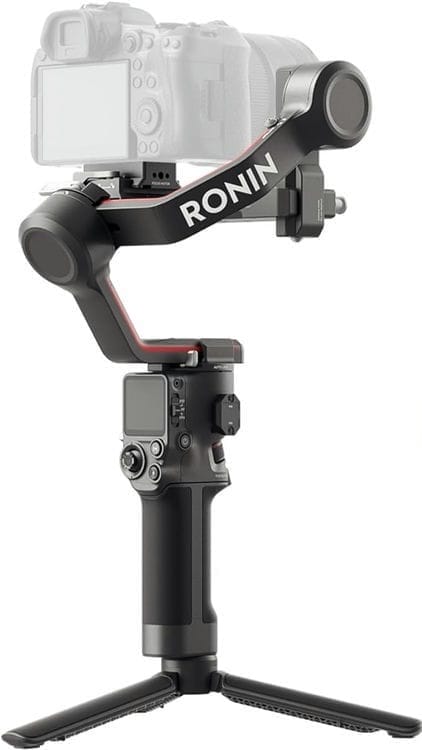
1. DJI RS 4 Pro
The DJI RS 4 Pro is one of the most advanced professional gimbals available today and pairs exceptionally well with the Sony A7S III. Designed for filmmakers, wedding videographers, and content creators.
This gimbal delivers powerful stabilization, smooth motion, and highly reliable performance.
With its strong payload support, the RS 4 Pro easily handles the A7S III along with heavier lenses, microphones, monitors, and filmmaking accessories.
Its improved motors, refined balance system, and enhanced third-generation stabilization algorithm ensure shake-free footage even during fast movements, low-angle shots, or dynamic tracking sequences.
The RS 4 Pro also offers a convenient OLED touchscreen, intelligent shooting modes, Bluetooth shutter control, and vertical shooting capability without complex re-balancing.
Whether you’re filming cinematic scenes, documentaries, travel videos, or commercial shoots, pairing the Sony A7S III with the DJI RS 4 Pro significantly boosts stability, efficiency, and creative possibilities.
This combination ensures top-tier video performance, making it a favorite among professionals who demand both flexibility and rock-solid stabilization.
- Maximum Payload: 4.5 kg (10 lbs)
- Battery Life: Approx. 29 hours
- Charging Time: Approx. 1.5 hours
- Connections: Bluetooth 5.0, USB-C, RSS, NATO, Cold Shoe, Focus Motor Port
- Display: 1.8″ OLED touchscreen
- Smartphone App: DJI Ronin App (iOS/Android)
- Weight: 1.84 kg (3.97 lbs)
- Warranty: 1-year limited warranty
- Rotation Range:
• Pan – 360° continuous
• Tilt – −112° to +214°
• Roll – −95° to +240° - Follow Speed: 360°/s
- Build: Carbon fiber axis arms
- Dimensions: Folded – 283 × 271 × 75 mm; Unfolded – 416 × 223 × 202 mm
- High 4.5 kg payload supports Sony A7S III with heavy lenses.
- Extremely smooth 3-axis stabilization system.Long 13-hour battery life.
- Fast charging reduces downtime.
- Multiple accessory ports for motors, video transmitters, and LiDAR.
- Wireless control and DJI Ronin app compatibility.
- Durable build with carbon-fiber components.
- Slightly heavy for long handheld use.
- Higher price point compared to lighter gimbals.
- Balancing heavy lenses may take time.
- Might be over-engineered for simple, lightweight setups.
2. DJI RS 3 Pro
The DJI RS 3 Pro is a professional-grade 3-axis gimbal built for filmmakers using high-performance cameras like the Sony A7S III.
Known for its powerful motors, high stability, and large payload support, it delivers smooth cinematic footage even during fast movements or complex tracking shots.
With a maximum payload of 4.5 kg, it easily handles the Sony A7S III along with heavy lenses, microphones, monitors, and other accessories—making it ideal for commercial shoots, weddings, documentaries, or action filmmaking.
Its carbon-fiber construction keeps the gimbal lightweight yet durable, striking a perfect balance between portability and reliability.
The built-in OLED touchscreen allows quick access to settings, while the advanced Bluetooth and USB-C integrations offer convenient camera control and accessory connectivity.
If you want to unlock the true video potential of your Sony A7S III, the DJI RS 3 Pro stands out as a highly capable and future-proof stabilization system.
- Maximum Payload: 3 kg (6.6 lbs)
- Battery Life: Approx. 12 hours
- Charging Time: Approx. 1.5 hours
- Battery: LiPo, internal
- Automated Axis Locks on all three axes
- Extended carbon fiber axis arms
- LiDAR focusing / range finding
- O3 Pro image transmission (long range)
- Weight: ~ 1.1 kg
- Folding / compact design for transport
- Supports a very high 4.5 kg payload suitable for heavy Sony A7S III setups.
- Provides exceptionally smooth stabilization with advanced 3-axis motors.
- Offers long battery life of up to 12 hours for extended shooting days.
- Charges quickly in about 1.5 hours, reducing downtime.
- Multiple USB-C and Bluetooth options enhance connectivity and camera control.
- OLED touchscreen makes operation simple and intuitive.
- Carbon-fiber build ensures strength while keeping the gimbal lightweight.
- Can become heavy for long shoots when paired with full camera rigs.
- Higher price may not fit all budgets.
- Requires careful balancing, especially with large lenses
- .Heavy payload use can strain arms during long handheld sessions.
3. Zhiyun Crane 3S
For creators using the Sony A7S III — especially when outfitted with cinema-type lenses, monitors, and accessories — the Crane 3S stands out as a professional-grade gimbal built to handle heavy camera rigs.
With its robust build and powerful “SUPER motors,” it supports large payloads comfortably, offering stability and smooth motion in demanding shooting scenarios.
Whether you are shooting cinematic films, documentaries, or commercial work, the Crane 3S ensures your footage remains stable even with substantial camera weight.
Its modular design, extendable roll axis, and accessory-friendly mounting points make it a flexible tool for diverse setups — from handheld to rig, dolly, or even jib configurations — giving filmmakers room to grow and adapt their kit.
- Maximum Payload: 6.5 kg (14.3 lbs)
- Battery Runtime: Up to 12 hours
- Charging Time: Approximately 4 hours
- Operation Voltage: Max 25.2 V / Standard 11.1 V / Min 9.8 V
- Output Voltage: 5 V
- Stabilizer Following Deviation:
• Motion State: ±0.3° (max), ±0.1° (standard), ±0.05° (min)
• Static State: ±0.04° (max), ±0.01° (min) - Tilt Mechanical Range: 360°
- Roll Mechanical Range: ±75° (Standard range: 330°)
- Pan Axis Movement: 360° continuous rotation
- Operating Temperature: –10 °C to +45 °C
- Dimensions: 346 × 344 × 98 mm
- Weight: 2.47 kg (including batteries)
- Display: OLED status screen
- Smartphone App: ZY Play app for remote control and customization
- Warranty: 1-year limited manufacturer warranty
- High payload capacity — handles up to 6.5 kg, suitable for heavy Sony A7S III rigs with large lenses and accessories.
- Powerful 3-axis stabilization from strong motors withstands motion, wind, and dynamic camera moves.
- Versatile build: modular design and extendable roll axis allow flexibility across setups (handheld, dolly, jib, etc.).
- Long battery life (~12 hours) supports full-day shoots without frequent battery swaps.
- Broad rotation ranges on all axes allow creative camera movements — pans, tilts, rolls, 360° spins.
- Multiple mounting points for accessories — monitor, matte box, follow focus, microphone, battery pack.
- Suitable for professional cinema, documentary, commercial shoots — more future-proof than lightweight gimbals.
- Gimbal body is heavy (~2.47 kg), so full rig becomes heavy — handheld use can be fatiguing over time.
- Balancing heavy camera + lens setup takes time and care before each shoot.
- Initial setup and adjustments may be complex for beginners compared to simpler gimbals.
- For lightweight camera rigs, its size and weight may be overkill — lighter gimbals may offer easier handling.
4. DJI RS 4
The DJI RS 4 is a highly capable 3-axis handheld gimbal stabilizer specially designed for hybrid mirrorless cameras like the Sony A7S III.
Known for its powerful motor performance, lightweight structure, and intelligent shooting features, the RS 4 helps filmmakers achieve buttery-smooth, cinematic footage even during fast movements.
Its improved ergonomics, stronger stabilization algorithms, and easy balancing system make it an ideal tool for creators shooting weddings, travel films, documentaries, YouTube videos, or commercial content.
For Sony A7S III users, the RS 4 offers excellent compatibility, allowing easy camera control through USB-C and Bluetooth.
The gimbal also includes an intuitive OLED touchscreen, customizable buttons, and multiple shooting modes that elevate the creative workflow.
With long battery life, a solid payload capacity, and user-friendly operation, the DJI RS 4 stands out as a versatile and reliable gimbal for professional as well as enthusiast filmmakers.
- Maximum Payload: 3 kg (6.6 lbs)
- 3-Axis Stabilization: Pan 360°, Roll -95° to +240°, Tilt -112° to +214°
- Controlled Rotation Speed: Up to 360°/s
- Gimbal Weight: Approx. 1.066 kg
- Battery Life: 12 hours to 29.5 hours
- Charging Time: Approx. 2.5 hours (18W fast charging)
- Connectivity: Bluetooth 5.1, USB-C ports, NATO rails, ¼‑20 thread
- Operating Temperature: -20°C to +45°C
- Excellent balance between portability and performance.
- 3-axis stabilization ensures smooth, cinematic shots.
- Supports Sony A7S III with most lenses comfortably.
- Long battery life suitable for full-day shooting sessions.
- OLED touchscreen improves ease of control and settings adjustments.
- Fast follow speed ideal for action and moving subjects.
- Lightweight, ergonomic design for extended handheld use.
- Payload limit may not support heavy cine lenses or large rigs.
- Built-in battery cannot be swapped during shoots.
- Performance reduces when mounted with bulky accessories.
- Not as strong as higher-end gimbals designed for heavy-duty cinema setups.
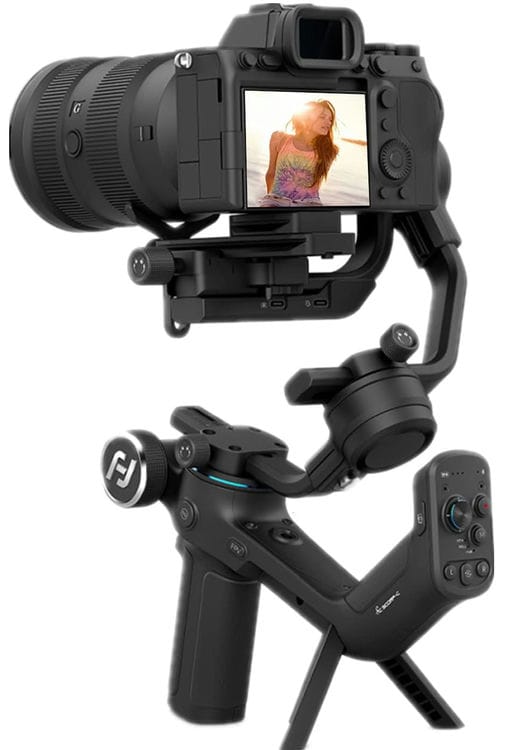
5. FeiyuTech Scorp-C
The FeiyuTech Scorp-C is a compact, lightweight, and highly practical 3-axis gimbal designed to support mirrorless cameras like the Sony A7S III.
It offers a strong balance of stability, portability, and intelligent design, making it ideal for filmmakers, travel creators, wedding videographers, and YouTubers who want smooth cinematic footage without the bulk of a heavy stabilizer.
Its 2.5 kg payload capacity comfortably handles the A7S III paired with most standard lenses, allowing creators to shoot confidently whether indoors or outdoors.
The Scorp-C is built for convenience, featuring an ergonomic grip, intuitive controls, and a quick-release system that makes mounting and balancing faster.
Its long battery life of up to 13 hours enables full-day shooting, and fast charging minimizes downtime. The wide mechanical movement range ensures creative flexibility, offering smooth pans, controlled tilts, and stable roll movements.
Overall, the FeiyuTech Scorp-C is an excellent choice for A7S III users who want a budget-friendly yet capable gimbal with reliable stabilization and user-friendly operation.
- Payload: ~ 2.5 kg (5.51 lbs)
- Battery Capacity: 2,500 mAh (built-in)
- Battery Life: ~ Up to 13 hours
- Charging Time: ~ 1.6 hours (with 18 W fast charger)
- Rotational Range (Mechanical): Pan unlimited 360°, Tilt ~320°, Roll ~320°
- Controllable Range: Tilt +110° to −45°, Roll +20° to −20°, Pan 360°
- Weight: ~ 1.2 kg (with quick release plate, excluding camera & lens)
- Display: Fixed OLED screen
- Connections: USB-C for charging and control; several USB-C ports for camera control accessory integration
- Material: Mixed aluminum alloy & synthetic resin
- Operating Voltage: 6.8-8.4 VDC
- Operating Temperature: −10 °C to +45 °C
- Mounts: 3 × 1/4-20 female threads for accessories
- Lightweight and portable design suitable for travel and long shoots.
- 2.5 kg payload supports Sony A7S III with most lenses.
- Smooth stabilization with full 360° pan.
- Long battery life of up to 13 hours.
- Fast charging reduces downtime.
- USB-C camera control enhances usability.
- ARCA-compatible quick-release system speeds up setup.
- Not suitable for heavy cine lenses or large camera rigs.
- Slightly heavier than some compact gimbals.
- No built-in advanced tracking or display screen.
- May struggle during very fast or intense movements.
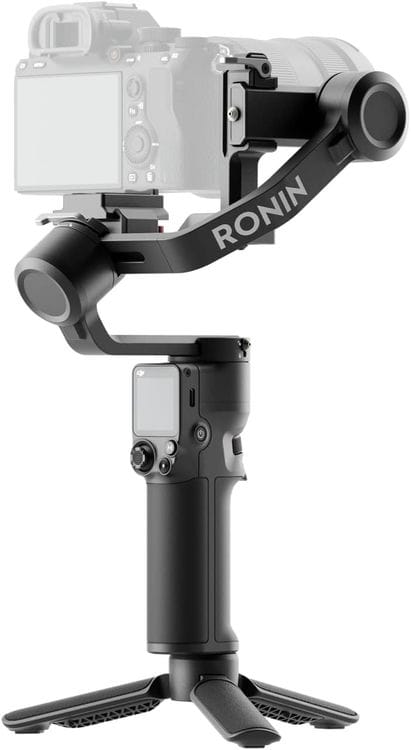
6. DJI RS 3 Mini
The DJI RS 3 Mini is a lightweight yet powerful gimbal designed for creators who want professional-grade stabilization without carrying heavy gear.
When paired with the Sony A7S III, it becomes an excellent setup for filmmakers, vloggers, and content creators who need smooth, cinematic footage in a compact form.
With its portable design, strong payload capacity, and intuitive controls, the RS 3 Mini is ideal for travel shooting, weddings, events, documentaries, and run-and-gun filmmaking.
Despite being smaller than the standard RS series, it still delivers impressive motor strength and advanced stabilization algorithms.
The quick-release plate makes mounting the Sony A7S III simple, and Bluetooth shutter control allows convenient shooting without cables.
Its long battery life ensures you can shoot for extended periods without interruptions.
Overall, the DJI RS 3 Mini is a practical and affordable stabilizer for Sony mirrorless users seeking top-tier performance in a compact size.
- Tested Payload / Load Capacity: 2.0 kg (4.4 lbs)
- Net Weight: ~ 795 g (1.75 lbs)
- Battery Type: 2S internal battery (e.g. built-in Li-ion)
- Screen: 1.4″ full-color touchscreen
- Vertical Shooting: supported natively
- Bluetooth shutter control: built in
- Stabilization Algorithm: 3rd-gen RS algorithm
- Axis rotation ranges: Pan 360° continuous; Tilt and Roll ranges suitable for wide movement
- Operating Modes: various creative modes (e.g. time-lapse, panorama, sports)
- Compact / travel design: foldable or compact layout
- Extremely lightweight and travel-friendly
- Strong motor power supports Sony A7S III effortlessly
- Long battery life for full-day shooting
- Bluetooth shutter control eliminates cable clutter
- Easy setup with quick-release plates
- Compact design ideal for handheld or underslung shots
- Affordable compared to larger DJI gimbals
- Not ideal for heavy cinema lenses
- Smaller screen compared to larger RS models
- Limited advanced features of RS 3 Pro
- No built-in focus motor included
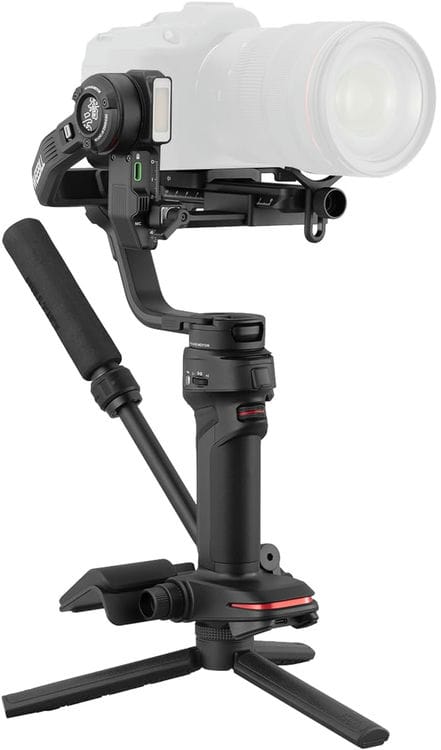
7. Zhiyun Weebill 3
The Zhiyun Weebill 3 is a versatile 3-axis handheld gimbal designed for mirrorless and DSLR cameras — and it works well with the Sony A7S III thanks to its balance of portability, battery endurance, and reliable stabilization.
Its compact “sling-style” design, built-in fill light and microphone, and intuitive controls make it a practical tool for filmmakers, travel videographers, and solo creators who want cinematic footage without bulky rigs.
Whether you’re shooting run-and-gun content, interviews, low-light cinema, or everyday video, the Weebill 3 offers a flexible, feature-rich platform that complements the strengths of the A7S III.
With generous battery life, smooth axis control, and wide motion range, the Weebill 3 helps you maintain stable, professional-looking video even during handheld shooting or in tight spaces.
Its dual quick-release plates make switching between handheld and tripod setups fuss-free, and its compatibility with external accessories increases its utility for different video scenarios.
For creators prioritizing mobility, speed, and quality, the Weebill 3 balances convenience and performance in a compact gimbal package.
- Number of Axes: 3 (Pitch/Tilt, Roll, Yaw/Pan)
- Mechanical Rotation Ranges:
• Pan (Yaw): 360° continuous
• Tilt (Pitch): 310° (from −130° to +180°)
• Roll: 340° (from −280° to +60°) - Controllable Ranges (user-usable):
• Tilt: ~250° (−90° to +160°)
• Roll: ~65° (−30° to +35°) - Battery Type: 3 × 18650 Li-Ion cells
- Battery Capacity: 2600 mAh
- Battery Runtime: Up to 21 hours
- Battery Charging Time: Approximately 2 hours
- Inputs / Outputs:
• Audio input: 3.5 mm
• USB-C input/output for camera power and control - Wireless Connectivity: Wi-Fi (2.4 GHz), Bluetooth 5.0
- Display: 0.96‑inch OLED touchscreen
- Mounting / Accessory Threads: 3 × 1/4‑20 female + 2 × 1/4‑20 male; dual quick release plates
- Folded Dimensions: ~342 × 206.5 × 72.5 mm
- Weight: ~1.1 kg (approx. 2.4 lbs)
- Long battery life — up to 21 hours, great for extended shoots without replacement.
- Built-in microphone and fill light — reduces accessory clutter and simplifies setup.
- 3-axis stabilization with full 360° pan and wide tilt/roll angles — allows creative movement and smooth dynamic shots.
- Compact and relatively lightweight design — easier to carry and handle than larger cinema gimbals.
- Quick-release plates allow fast switching between configurations (handheld ↔ tripod) without rebalancing.
- USB-C and Bluetooth connectivity — convenient power supply and camera control options.
- OLED touchscreen and intuitive controls — makes mode switching and adjustments fast and user-friendly.
- Payload limit may be restrictive for very heavy cinema lenses or large rig setups when using A7S III.
- Built-in batteries are not swappable — means downtime if you exhaust runtime unless you carry a charger.
- With heavier lenses or accessories, balancing can become tricky and may reduce stabilization efficiency.
- Not as powerful as heavy-duty cinema gimbals — may struggle under maximum loads or aggressive motion compared to high-end stabilizers.
ABOUT CAMERA
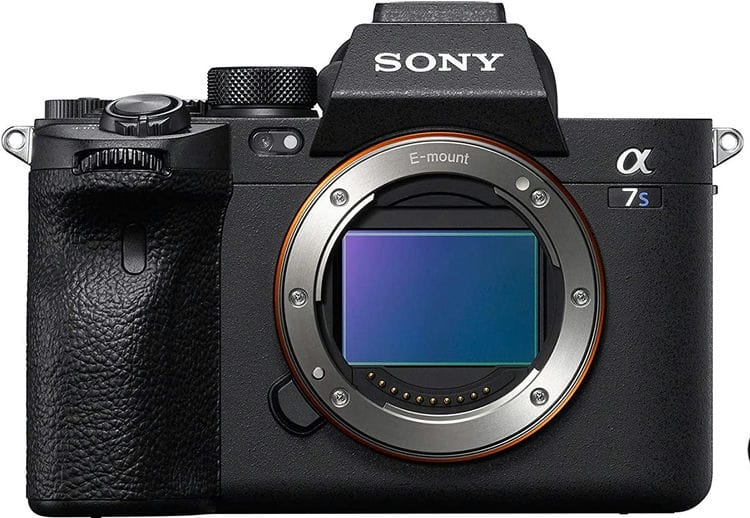
The Sony A7S III is one of the most celebrated full-frame mirrorless cameras ever built for professional video creators, filmmakers, and content producers who demand exceptional performance in every lighting condition.
Designed around a 12.1-megapixel Exmor R CMOS sensor and Sony’s advanced BIONZ XR image processor.
the A7S III delivers outstanding low-light capability, high dynamic range, and ultra-clean footage even at extremely high ISO levels.
This makes it a favourite choice for weddings, documentaries, travel films, night photography, and cinematic videography.
What truly sets the Sony A7S III apart is its unmatched video performance.
The camera offers 4K recording at up to 120fps, 10-bit 4:2:2 internal recording, S-Cinetone, and 15+ stops of dynamic range, giving filmmakers immense flexibility in post-production.
Its advanced autofocus with Real-time Eye AF ensures precise tracking, while the 5-axis in-body image stabilization helps capture smooth, steady shots—even during handheld or run-and-gun filming.
Built for professionals, the A7S III includes dual CFexpress Type-A/SD card slots, an articulating touchscreen, a redesigned menu system, and excellent heat management that allows unlimited recording without overheating issues.
Whether you’re shooting YouTube content, high-end commercial films, or live events, the Sony A7S III offers reliability, speed, and image quality that few cameras can match.
In short, the Sony A7S III is a future-proof, performance-driven camera, crafted for creators who want cinema-quality output in a compact, lightweight system.
Key Features to Look at When Buying the Best Gimbal for Sony A7S III
- Payload Capacity: The Sony A7S III is a full-frame mirrorless camera often paired with heavier lenses or accessories. Therefore, the gimbal must support a payload exceeding your camera + lens + accessories weight, ideally around 3 kg or more, to ensure smooth operation without straining the motors.
- Motor Strength & Stabilization Performance: Look for a gimbal with strong motors and precise 3-axis stabilization (Pan, Tilt, Roll). This ensures stable footage even when the camera rig is heavier, when shooting handheld or during fast motion. Good stabilization algorithms and torque help maintain smooth motion under load.
- Battery Life & Efficiency: For long shoots — weddings, events, documentaries or travel videos — gimbal battery runtime matters a lot. A battery providing 10-15 hours or more of runtime helps avoid frequent interruptions. Fast charging is a bonus when you need to move quickly between shoots.
- Build Quality & Ergonomics: A robust build — using durable materials like carbon fiber or high-quality alloy — ensures longevity. Ergonomic design (comfortable grip, balanced weight distribution, easy reach controls) helps during long handheld sessions. Portability and compactness matter if you travel often.
- Mounting Options & Accessory Support: Extra accessory mounts (1/4″-20 threads, cold shoes, NATO rails, accessory ports) are useful for adding external monitors, microphones, video lights, or follow focus motors. This gives flexibility for professional setups with the A7S III.
- Control & Connectivity: The gimbal should support camera control (shutter, start/stop), ideally via USB-C or dedicated camera cables. Wireless connectivity (Bluetooth or app based) is useful for adjusting settings on the fly. Built-in display or intuitive control panel adds to convenience.
- Versatility & Shooting Modes: Look for features like vertical shooting mode (for social media or portrait video), FPV / full-range pan, timelapse / panorama / motion-lapse support, and smooth follow-focus or zoom control if you use powered lenses. Versatile modes expand creative possibilities.
- Portability & Setup Convenience: If you shoot handheld, travel, or work solo — a gimbal that is lightweight, easy to balance, quick to set up and foldable makes a big difference. Balanced design reduces fatigue, and fast-release systems help speed up switching between shots.
- Durability & Weather Resistance: Shooting outdoors or in challenging environments calls for a gimbal that can tolerate dust, moisture, and temperature extremes. Good build quality and weather-sealed construction increase reliability and lifespan.
- Price-to-Performance Ratio: Finally, ensure the gimbal gives good value relative to its features and capacity. For a shooter using A7S III, investing in a gimbal that supports higher payload, robust build, and rich features pays off more than a budget gimbal that struggles under load.
FAQs
Conclusion
Pairing a high-quality gimbal with the Sony A7S III transforms this camera from a powerful low-light and video body into a cinematic, mobile filmmaking rig.
A good gimbal unlocks the A7S III’s full potential — enabling smooth, edit-ready footage during handheld shots, walk-and-talk sequences, panning, tracking, or creative movement.
For creators shooting weddings, documentaries, travel videos, or content for social media and YouTube, this combination brings flexibility and professionalism.
Whether you choose a compact gimbal for portability or a heavy-duty stabilizer for maximum lens support.
the A7S III + gimbal delivers stable, cinematic visuals while preserving the camera’s strengths: superb image quality, dynamic range, and reliable low-light performance.
Ultimately, if you want to maximize the Sony A7S III’s video capabilities — with smooth motion, professional-level stabilization, and creative control over movement — investing in a well-matched gimbal is one of the best decisions you can make.