
Index
If you’re serious about shooting professional-level video with a Sony A7III, then relying on handheld footage is a rookie mistake.
The camera is excellent — but its full-frame power exposes every tiny shake. A proper gimbal isn’t optional, it’s the difference between amateur and cinematic.
A Sony A7III gimbal gives you actual stability: smooth pans, steady tracking shots, and zero jitter when you move fast or shoot in crowded environments.
Whether you’re a solo YouTuber, a run-and-gun filmmaker, or a wedding videographer dealing with chaotic lighting and constant movement, this tool keeps your shots clean and controlled.
It also allows creative motion — low-angle walking shots, parallax slides around subjects, and buttery-smooth reveals that handheld just can’t replicate.
Most modern gimbals built for the A7III also bring smart features that reduce workload: auto-tuning for balance, follow-focus systems, vertical shooting for social content, and extended battery life for long events.
You’re not just stabilizing the camera; you’re unlocking the full potential of the A7III’s sensor and autofocus system.
Smooth Shots Made Easy: Best Gimbals for Sony A7III Users
 |
(Editor’s Choice) |
 |
(Editor’s Choice) |
 |
|
 |
|
 |
|
 |
|
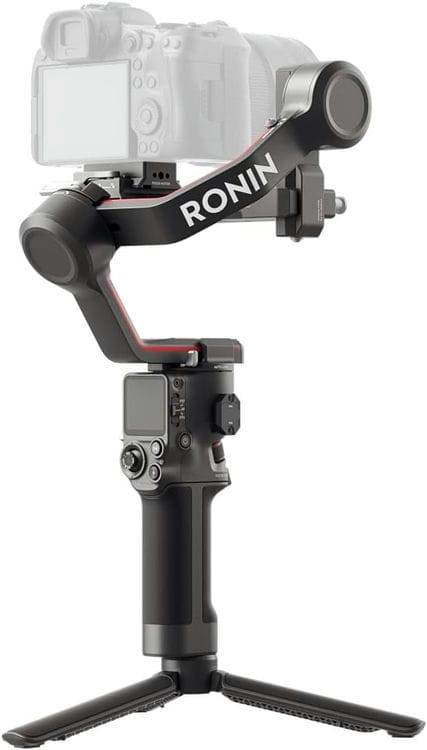
1. DJI RS 3
If you’re using a Sony A7III and still dealing with shaky handheld footage, you’re wasting the potential of that full-frame sensor.
The DJI RS 3 gimbal is built to handle cameras like the A7III with confidence — giving you rock-solid stabilization, faster setup, and more control while shooting dynamic scenes.
Its stronger motors ensure smooth motion even with heavier zoom lenses, making it perfect for professional filmmaking, weddings, documentaries, or travel videos.
The RS 3 keeps everything practical: automatic axis locks, Bluetooth camera control, instant switching between modes, and a bright 1.8-inch touchscreen for quick adjustments.
You can focus purely on creative movement — low-angle tracking shots, parallax moves, or fast transitions — without worrying about jitter or awkward handling.
The battery runs long enough for real full-day shoots, and the lightweight design keeps your arm from dying halfway through.
In short: Pairing the Sony A7III with the DJI RS 3 is a smart upgrade if you want cinematic output that actually looks professional.
- Number of Axes: 3 (Pitch/Tilt, Roll, Yaw/Pan)
- Maximum Payload: 3.0 kg (6.6 lbs)
- Weight: 1.1 kg
- Mechanical Rotation Ranges:Pan (Yaw): 360° continuous,Tilt (Pitch): 310°,Roll: 340° (from −280° to +60°)
- Controllable Ranges: Tilt: ~250° (−90° to +160°), Roll: ~65° (−30° to +35°)
- Battery Type: 7.2V 3000mAh 18650 Li-Ion
- Battery Runtime: Up to 12 hours
- Charging Time: Approximately 2.5 hours (18W USB-C charger)
- USB-C for charging and camera control
- Bluetooth: 5.0 for wireless connectivity
- Display: 1.8-inch OLED touchscreen
- Extended Grip/Tripod (Plastic): Approx. 183 g (0.4 lbs)
- Upper and Lower Quick-Release Plates: Approx. 107 g (0.23 lbs)
- Operating Temperature: −20°C to +45°C (−4°F to 113°F)
- Mounting Threads: 3 × 1/4″-20 female threads for accessories
- Handles Sony A7III with heavier lenses effortlessly
- Very smooth stabilization for moving shots
- Touchscreen makes controls quicker and simpler
- Fast setup with auto-locks and quick-release system
- Camera control from the gimbal improves workflow
- Solid battery life for long shooting days
- Travel-friendly design for solo creators
- Requires rebalancing when changing lenses
- Not suitable for extremely heavy cine rigs
- Beginners face a learning curve initially
- Battery drains faster with max payload and intense use
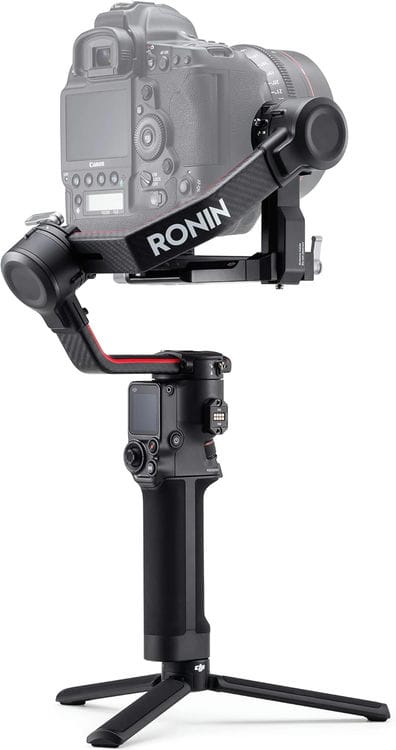
2. DJI RS 2
The Sony A7III delivers excellent image quality, but handheld shooting quickly reveals unwanted shakes and jitters. The DJI RS 2 is designed to eliminate those flaws and unlock true cinematic performance.
Built for professional videographers and serious content creators.
it provides advanced stabilization with strong motors that easily handle full-frame cameras like the A7III paired with heavier zoom or prime lenses.
This gimbal also improves workflow. The 1.4-inch color touchscreen allows direct access to key settings without depending on a mobile app.
Carbon fiber construction keeps the unit lightweight while still supporting a large payload.
Battery runtime is long enough for full-day shooting, meaning fewer interruptions on set or while traveling.
Whether you shoot weddings, events, documentaries, or fast-moving outdoor scenes, the DJI RS 2 ensures clean, fluid shots that make your work look more polished and professional.
- Number of Axes: 3 (Pan, Tilt, Roll)
- Mechanical Rotation Ranges:Pan: 360° continuousTilt: 310°Roll: 360°
- Payload Capacity: Up to 4.5 kg (10 lbs)
- Item Weight: Approx. 1.3 kg (2.8 lbs)
- BG30 Grip: Approx. 0.265 kg (0.58 lbs)
- Extended Grip/Tripod: Approx. 0.226 kg (0.50 lbs)
- Battery:
- Type: Built-in lithium-ion
- Runtime: Up to 12 hours
- Charging Time: Approximately 1.5 hours
- Display: 1.4-inch full-color touchscreen
- Connectivity:
- USB-C for camera control and charging
- Bluetooth for wireless control
- Operating Temperature: -20°C to 45°C (-4°F to 113°F)
- Mounting Threads: 3 × 1/4″-20 female threads for accessories
- Strong payload support — ideal for A7III + heavier lenses
- Very smooth stabilization for dynamic movement
- Lightweight yet durable carbon-fiber build
- Touchscreen improves control and speed while shooting
- Expandable accessory options for professional rigs
- Long battery life supports day-long shoots
- Better ergonomics reduce fatigue during handheld operation
- Add-on accessories may be required for full functionality
- Can feel overkill for small, lightweight lens setups
- Requires practice to balance and operate correctly
- Battery drains faster with heavy payload and intensive use
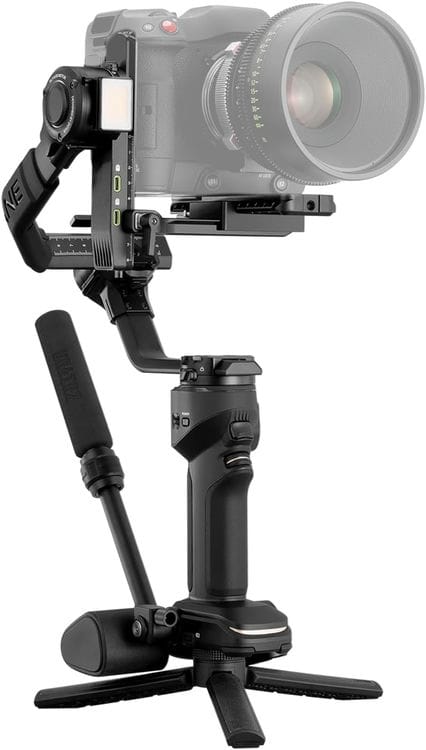
3. Zhiyun Crane 4
The Sony A7III delivers excellent video quality, but handheld shooting can still result in shaky and unstable footage.
The Zhiyun Crane 4 is designed to fix that problem — giving you stable, professional-quality shots with strong motor performance and reliable 3-axis stabilization.
It easily supports mirrorless full-frame setups like the A7III paired with heavy zoom lenses, making it a solid choice for filmmakers, wedding videographers, travel shooters, and content creators who need smooth motion.
This gimbal focuses on comfort and usability.
The adjustable sling grip with a wrist rest reduces fatigue during long shooting sessions.
A quick-release system makes mounting and switching between horizontal and vertical shooting fast and frustration-free.
The onboard touchscreen allows easier control without reaching for your phone every time.
With long battery life and compatibility with a wide range of setups, Crane 4 helps unlock more creative movement — low-angle shots, tracking shots, panning and more — making your videos look noticeably more cinematic and professional.
- Payload / load capacity: 4.5 kg (10 lbs)
- Number of axes: 3 (Pan, Tilt, Roll)
- Pan mechanical range: 360°
- Tilt mechanical range: –72° to +142°
- Roll mechanical range: –251° to +71°
- Net weight (without tripod): ~2 kg
- Product size: 340 × 280 × 70 mm
- Battery type & capacity: 4 × 18650 cells (2600 mAh total)
- Runtime: ~12 hours
- Charging time: ~1.5 hours via PD / fast charging
- Bluetooth: version 5.0
- Touchscreen: 1.22-inch color display
- Built-in fill light: 10W, up to ~3200 lux with adjustable color temperature
- Strong payload support — ideal for Sony A7III with bigger lenses
- Smooth stabilization for fast-moving shots
- Long battery life suitable for full-day shoots
- Comfortable handling with sling grip and wrist rest
- Quick-release plates save setup time on shoots
- Touchscreen improves usability and workflow
- Works with a wide range of professional camera setups
- Slightly bulky for minimal lightweight shooting setups
- Rebalancing needed when changing lenses
- Not suitable for very heavy cinema rigs beyond limit
- Built-in battery system means pause required when recharging
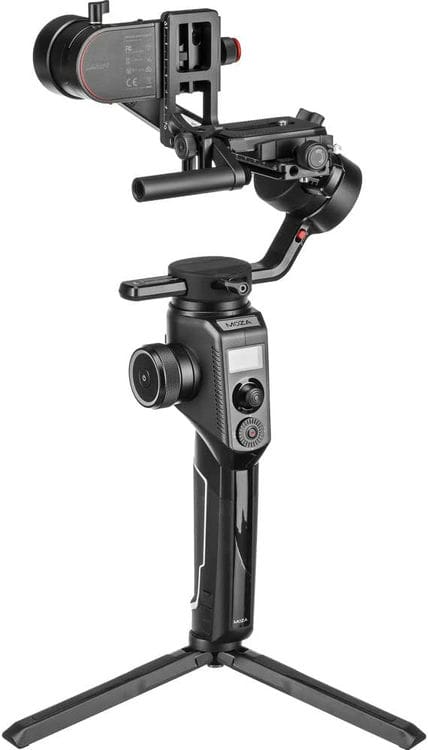
4. Moza AirCross 2
The Sony A7III is a powerful full-frame camera, but handheld footage can easily look shaky and unpolished.
The Moza AirCross 2 is built to solve that problem with strong 3-axis stabilization and a lightweight design, making it an ideal match for the A7III.
It supports a range of lenses, including heavier zoom options, while keeping your motion smooth during fast movement, walking shots, pans, and tracking footage.
What makes the AirCross 2 stand out is how portable and practical it is. Weighing just around 1 kg, it’s comfortable for long, handheld filming sessions.
The battery lasts up to 12 hours, so you can shoot an entire event or travel day without stopping for power.
Its design also makes balancing and switching between horizontal and vertical shooting quick and easy — perfect for YouTubers, wedding filmmakers, and creators who shoot both cinematic and social media content.
- Number of Axes: 3 (Pan, Tilt, Roll)Mechanical Rotation Ranges:
- Pan: 360° continuous
- Tilt: 360°
- Roll: 360°
- Payload Capacity: Up to 3.2 kg (7.05 lbs)
- Gimbal Weight: 950 grams (2.1 lbs)
- Battery:
- Type: Built-in 3000mAh lithium-ion
- Runtime: Up to 12 hours
- Charging Time: Approximately 1.5 hours with 18W fast charger
- Connectivity:
- USB-C port for charging and camera control
- Bluetooth 4.2 BLE
- 2.4G wireless communication
- 3 × 3.5mm Multi-CAN ports for accessories
- Operating Temperature: 0°C to 50°C
- Display: OLED screen
- Control: Joystick, control wheel, and trigger
- App Compatibility: MOZA Master (iOS & Android)
- Included Accessories: USB-C cable, camera control cables, tripod, lens support, quick-release plate
- Lightweight design for comfortable handheld use
- Strong stabilization for professional-quality movement
- Long battery life supports full-day filming
- Handles Sony A7III + larger lenses effectively
- Works well for both cinematic and vertical social content
- Accessory mounting options for advanced setups
- Easy balancing and fast switching between orientations
- Payload limit not suitable for heavy cinema rigs
- Rebalancing required when changing lenses
- Internal battery — no hot-swap option
- Bulkier than very small gimbals meant for lightweight setups
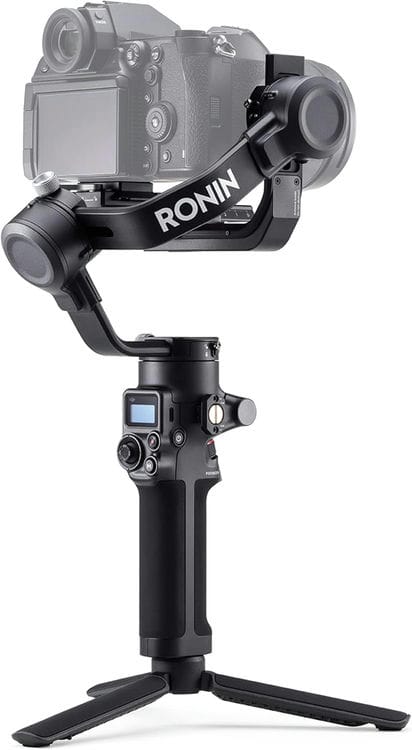
5. DJI RSC 2
The Sony A7III offers excellent video capabilities, but handheld shooting can easily introduce shakes that ruin the cinematic feel.
The DJI RSC 2 fixes that problem with powerful stabilization, a compact design, and features optimized for professional creators.
It’s built for full-frame cameras like the A7III and supports a good variety of lens setups without compromising smoothness.
One of its standout strengths is the foldable structure — making it much easier to carry in a backpack or camera bag.
The strong motors deliver reliable stabilization even during motion such as walking, panning, or tracking fast-moving subjects.
A built-in OLED screen gives easy access to key controls, while the long battery life helps you shoot confidently throughout long events or travel sessions.
Whether you are a wedding filmmaker, content creator, travel vlogger, or working on commercial videos, the RSC 2 provides a seamless workflow and a big improvement in footage quality.
- Number of Axes: 3 (Pan, Tilt, Roll)Mechanical Rotation Ranges:Pan: 360° continuous
- Tilt: -240° to +95°
- Roll: -112° to +214°
- Payload Capacity: Up to 3 kg (6.6 lbs)
- Gimbal Weight: 1.7 kg
- Battery:
- Type: Built-in 3400mAh lithium-ion
- Runtime: Up to 14 hours
- Charging Time: Approximately 2 hours with 18W fast charger
- Display: 1-inch OLED screen
- Connectivity:
- USB-C for charging and camera control
- Bluetooth 5.0 for wireless control
- Operating Temperature: -20°C to 45°C (-4°F to 113°F)
- Mounting Threads: 1/4″-20 female thread, cold shoe, 2 × NATO rail
- Special Features:
- Foldable design for easy storage
- RavenEye Image Transmission System support
- Multiple shooting modes: Underslung, Flashlight, Selfie
- ActiveTrack 3.0 with RavenEye
- SuperSmooth mode for lenses up to 100mm equivalent focal length
- Strong stabilization for professional-quality movement
- Supports Sony A7III + medium/heavier lenses comfortably
- Foldable and highly portable — great for travel shoots
- Excellent battery life for long filming days
- OLED screen simplifies operation without a phone
- Multiple shooting positions including underslung and portrait modes
- Expandable setup with accessory mounts for future gear growth
- Payload limit may struggle with very heavy cinema rigs
- Requires balancing every time you change lens or accessories
- Non-removable internal battery — no hot-swap option
- Slight learning curve for complete beginners
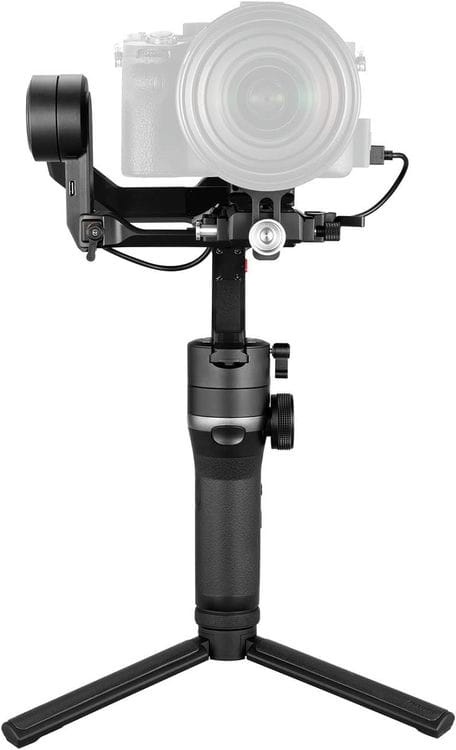
6. Zhiyun Weebill S
The Sony A7III is capable of producing impressive video quality, but handheld shooting can easily bring in unwanted shakes.
The Zhiyun WEEBILL-S solves that by offering strong stabilization in a compact body.
It’s designed to handle full-frame mirrorless cameras like the A7III with standard zoom or prime lenses, delivering smooth tracking shots, cinematic pans, and stable motion even when you’re shooting handheld on the move.
The WEEBILL-S stands out with its lightweight and ergonomic “sling” design, which makes low-angle and underslung shooting much more comfortable.
You also get a clear OLED screen and onboard controls so you can adjust settings such as motor power and follow speed without relying on a mobile app. L
ong battery life ensures a full day of work without frequent recharges, making it a top choice for run-and-gun filmmakers, travel creators, wedding videographers, and vloggers who want great stability without carrying a heavy rig.
- Maximum Payload: 3.0 kg (6.6 lbs)
- Battery Life: Up to 14 hours
- Charging Time: Approximately 2.5 hours
- Weight: 926 g (2.04 lbs)
- Number of Axes: 3-Axis (Pitch, Roll, Yaw)
- Rotation Range: Yaw: 360°, Pitch: 314°, Roll: 314°
- Battery Type: 2 x 18650 Li-ion Batteries
- Connections: USB-C for charging and camera control
- Display: OLED screen
- Smartphone App: ZY Play for gimbal control and firmware updates
- Operating Voltage: 6.8V – 8.4V
- Included Accessories: Mini tripod, storage case, quick release plate, USB-C cable, optional focus/zoom motor
- Strong stabilization for smooth cinematic footage
- Lightweight and compact — ideal for travel and long shoots
- Long battery life supporting full-day shooting
- Comfortable sling design for low-angle handheld shots
- Quick-release mounting for fast balancing
- Multiple creative shooting modes available
- OLED screen with easy access to controls
- Not suitable for very heavy lenses or fully rigged setups
- Rebalancing needed when changing lens or accessories
- No hot-swap battery support — must power down to replace
- Slight learning curve for first-time gimbal users
ABOUT CAMERA
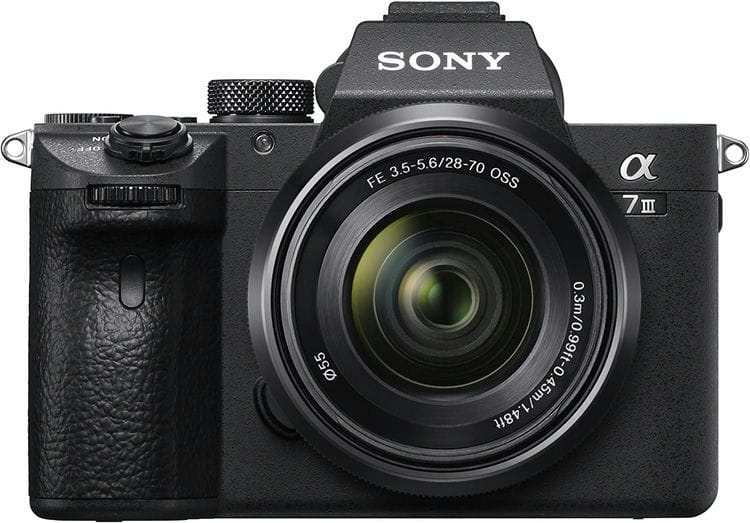
The Sony A7III remains a benchmark in full-frame mirrorless cameras — striking a powerful balance between professional-level performance and accessible handling.
At its core is a 24.2-megapixel back-illuminated Exmor R CMOS sensor paired with the BIONZ X image processor, which together deliver sharp, detailed images and impressive low-light performance.
Whether you’re shooting landscapes, portraits, weddings, events, or video content, the A7III adapts effortlessly, offering reliable performance across a wide variety of situations.
One of the standout strengths of the A7III is its dynamic range and noise-handling capabilities: even under dim lighting, the camera preserves detail and clarity, enabling clean files that are ideal for post-processing.
Autofocus performance is another highlight — fast, accurate, and capable of tracking moving subjects, which makes it excellent for sports, wildlife, and event photography. Battery life, too, is a practical advantage in a category where many mirrorless cameras struggle.
it lets you shoot significantly longer, whether you’re on location, traveling, or working a full day.
The A7III is also video-friendly. It offers 4K video with full pixel readout and no pixel binning, giving crisp, cinematic footage. With S-Log capabilities and flexible picture profiles.
it serves both content creators and indie filmmakers who want to grade their footage for cinematic looks.
Combine this with a compact, lightweight body compared to traditional DSLRs, and you get a highly versatile camera that works as well for handheld shooting and travel as it does for studio work or professional assignments.
Key Features to Look at When Buying the Best Gimbal for Sony A7III
- Payload Capacity / Load Support: Because the A7III is a full-frame camera and you often use medium or heavy lenses — especially zooms — ensure the gimbal supports at least 3 kg (≈ 6.6 lbs) payload or more. This gives you enough margin for the camera body, lens, and possibly small accessories. Underpowered gimbals will struggle: motors sweat, stabilization degrades, and you may get wobbly footage.
- Strong 3-Axis Stabilization: A good gimbal must offer motorized 3-axis stabilization (pan, tilt, roll) with high-quality motor control. This is the core that ensures smooth tracking shots, walking shots, pans, or handheld sequences. The stronger and more refined the stabilization algorithm/motor — the closer your video output will look to cinematic standards.
- Ergonomics and Build — Weight & Comfort: Since mirrorless + lens + sometimes accessories can get heavy, you want a gimbal that’s light enough to hold, ergonomic enough for long shoots, and comfortable for handheld/underslung/low-angle work. A heavy or bulky gimbal drains your energy fast and makes run-and-gun filming a pain.
- Battery Life / Runtime: For events, travel shoots, long videos — you need solid battery life — 10 hrs or more is ideal. A gimbal that dies halfway through a shoot turns a creative session into a logistical headache. Also, look for convenience in charging or battery swap to avoid downtime.
- Quick Setup / Ease of Balancing: Frequent lens changes or switching between shooting modes (portrait/landscape, handheld/underslung) is common. A gimbal should allow fast balancing and quick setup, with features such as quick-release plates, adjustable mounts, and intuitive balance adjustments. The easier it is to balance, the more time you’ll spend shooting, not fiddling.
- Flexible Shooting Modes & Controls: Good gimbals offer flexibility: ability to shoot normal handheld, underslung, low-angle, vertical (portrait) for social content, follow-focus or camera control, and built-in controls (screen or buttons) so you can adjust settings without external devices. This versatility ensures the gimbal grows with your needs.
- Accessory Compatibility & Expandability : As you grow — maybe you add external monitors, follow-focus motors, lights, microphones — the gimbal should allow mounting accessories or offer ports/rail systems. A gimbal that restricts you to bare-bones shooting will limit your creative potential as you scale up.
FAQs
Conclusion
The Sony A7III is already a powerhouse for hybrid creators — but without the right gimbal, its cinematic potential stays locked away.
A high-quality gimbal gives you smooth, professional-grade stabilization, better autofocus results, and more creative camera movement without shaky distractions.
That’s the difference between looking like a beginner and producing videos that people actually want to watch.
Don’t cheap out on stabilization if you’re serious about video.
Pick a gimbal with strong motors, good payload support, long battery life, and fast setup — because every wasted second on balancing is a missed shot.
Whether you’re shooting weddings, travel films, YouTube content, or client projects, a proper gimbal transforms the A7III from a great camera into a complete filmmaking tool.